

CEO of Power Inside Out | Commercial Strategy, Sales and Leadership
Every leader wants to give their best. Over the years, I've taken part in many leadership training programs, but only recently did I start hearing about a key skill: vulnerability in leadership.
Why showing vulnerability is so hard when you lead
When a company hires a leader, it does so for their knowledge and leadership ability. That person comes in to help the team or the company grow based on their experience. If you're a CEO, everyone who asks you a question is looking for your judgment. If you promote an individual contributor to a leadership role, it's because of the capabilities they've shown.
That's why, as leaders, we tend to think we have to bring the answers, and that this is what makes us successful. In that context, saying “I don't know” or “I'm not good at this” can feel like admitting you're not up to the job.
I experienced this a few years ago, when I took over leadership of a new team covering Latin America and Canada. I had a solid track record in Latin America, but building trust with the Canadian team was a different challenge. At first, I felt I had to present myself as an experienced leader who could handle the role effortlessly. The reality was that I knew little about the Canadian market, and that gap worried me: I was afraid they'd see me as someone without the right credentials for the job.
Over time, I realized that authentic leadership would have worked much better. If I had acknowledged my experience in Latin America and, at the same time, my need to learn about the Canadian market, I would have built a more collaborative and trusting relationship with my new team much sooner.
What vulnerability in leadership really means
Vulnerability means openness and a willingness to show your own weaknesses or emotional state. In essence, it's the condition of being potentially exposed to others. At work, that can seem very dangerous: if you show yourself as vulnerable, others might respect you less or try to take advantage.
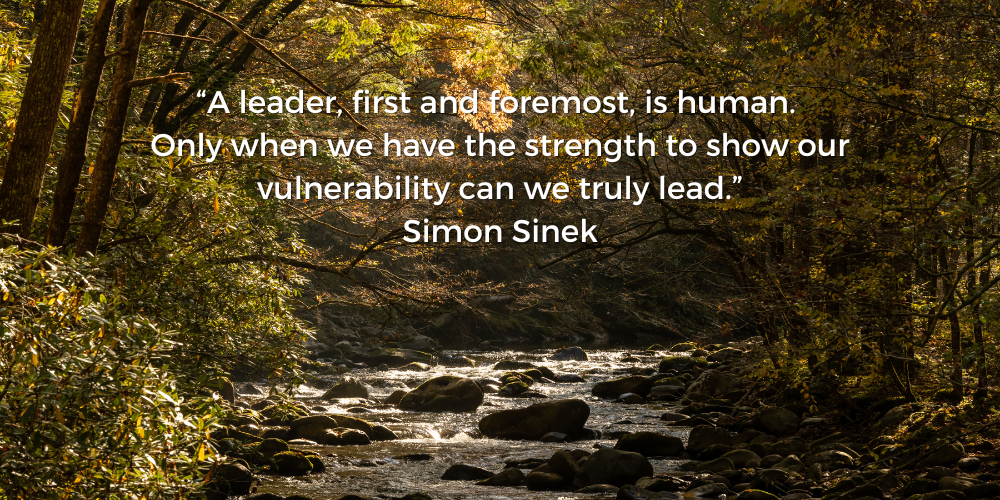
However, properly understood, vulnerability is a strategic strength capable of transforming an organization's culture and the effectiveness of its leadership. Its deepest meaning lies in courage: the strength to be transparent, acknowledge your own limits, and open yourself up to possible risk without losing resilience.
Vulnerability at work doesn't mean being weak or letting others push you around. It shows people that you're sincere, empathetic, and authentic. And it can coexist perfectly well with authority: a leader can acknowledge they don't have all the answers and still set the direction, or admit a mistake and still be accountable for the result.
Vulnerability-based trust
When I started training as a coach in Patrick Lencioni's workshop The Five Dysfunctions of a Team, in order to facilitate it across the Americas, I learned that trust is a fundamental pillar of a cohesive leadership team. And that, to achieve real trust, you need “vulnerability-based trust.”
Lencioni defines it as a space where leaders comfortably and quickly acknowledge, without being asked, their mistakes, weaknesses, failures, and need for help. Only when you're willing to be vulnerable can you build real trust within your team.
The behaviors that build trust
Trust is rarely built with a grand statement. It's built through small behaviors that the team observes consistently.
Acknowledging when you don't know
Saying “I don't know” can be hard when you feel people expect an answer from you, but faking certainty usually costs more. Acknowledging that you need more information shows that you prioritize making a good decision.
Admitting mistakes without making excuses
Sometimes it's enough to acknowledge what went wrong, own your part, and explain what you'll do differently next time. That shows humility and fuels a culture of continuous learning.
Asking for help when you need it
It shows that you know when you need another perspective, and it enables the team to do the same.
Asking for feedback regularly and acting on it
It shows that you value your team's opinion and are committed to improving. If every comment ends in a justification, next time they'll tell you less.
Celebrating your team's strengths, especially when they surpass yours
It shows humility and builds trust.
Vulnerability doesn't mean losing authority
Vulnerability in leadership works when it coexists with clarity. A leader can acknowledge they don't have all the answers and, at the same time, set the direction. They can admit a mistake without ceasing to be accountable. They can listen to other perspectives and still make the decision that's theirs to make.
Authority depends on how consistently a person makes decisions, keeps commitments, holds difficult conversations, and takes responsibility for results. In fact, trying to project absolute certainty can weaken that authority if the team senses there are doubts, mistakes, or limits no one can name.
Showing vulnerability also doesn't mean turning every uncertainty into a group consultation. There are moments when the team needs openness and others when it needs a clear decision.
The leadership challenge lies in knowing when to listen, when to acknowledge a limit, and when to move forward even without having all the information.
What shouldn't be confused with vulnerability
If you want to show more vulnerability, you need to know there's a fine line between “being vulnerable” and “being too vulnerable.” These behaviors don't build vulnerability-based trust and can hurt the team climate:
- Constantly complaining about personal problems.
- Sharing private details that make others uncomfortable.
- Blaming others for mistakes instead of taking responsibility.
- Being so emotionally affected that you can't make decisions.
- Using vulnerability as an excuse for poor performance, which can make you look weak and erode the team's trust.
Even when there are still open questions, the team needs to understand what to do while the answers arrive: what the priorities are, which decisions have already been made, and what the next steps are.
Trust starts with what the leader is willing to admit
Trust grows when the team feels it can work with reality as it is. That includes acknowledging mistakes, limits, open questions, and also what still needs to be learned.
When a leader can name those things without dramatizing or hiding behind their role, it sends an important signal to the rest of the team: here, we can speak honestly. That signal has an impact. It makes it more likely that others will ask for help before a problem escalates, acknowledge a mistake in time, or share information the leader perhaps didn't want to hear but needed to know.
That's why vulnerability in leadership isn't just a personal matter. It also influences the quality of the conversations an organization is capable of having.
How to practice vulnerability that strengthens the team
As always, here are some recommendations to help you become a more vulnerable leader and build more trust on your team:
- Share personal stories of challenges and failures. They humanize the leader and make them more approachable to the team.
- Admit when you don't have all the answers or when you've made a mistake. It shows humility and drives a learning culture.
- Ask for feedback regularly and act on it. You don't need to implement every suggestion, but you do need to show when a comment helped you change something.
- Create a safe space for open dialogue. Encourage people to express their ideas without fear of being judged. Before giving your answer, ask how they see it.
- Celebrate people's strengths, especially when they surpass yours.
- Be transparent about your goals, your challenges, and your decisions. That openness builds trust and authenticity within the team.
A team needs a leader it can trust
When a leader shows vulnerability, they create conditions that foster trust, empathy, and collaboration, and that ultimately improves the team's performance and innovation. Conflicts are resolved better, stress goes down, and people feel more empowered to act.
At Power Inside Out, we help leaders transform the way they lead from the inside out, to build more resilient, innovative, and high-performing organizations. Our programs help leaders harness the power of vulnerability without losing the respect and influence that effective leadership requires.
Do your leaders build the trust the team needs to speak honestly?