
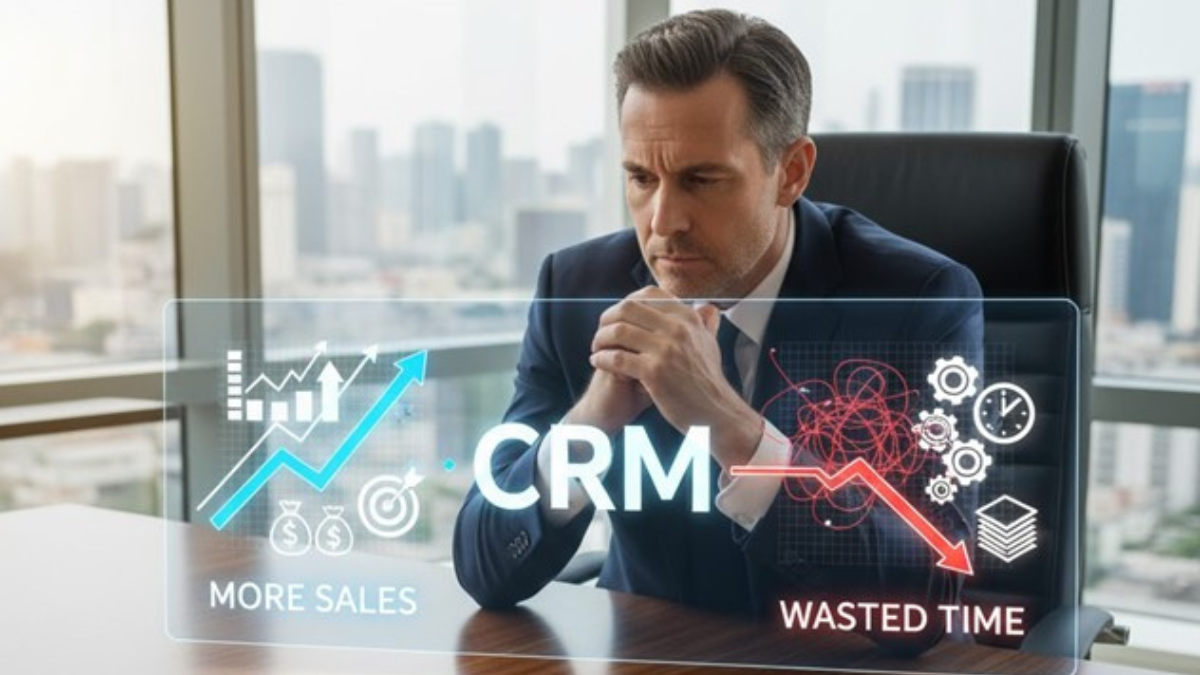
Own Your CRM Like You Own Your Business

Driving Rapid Growth for Your Company with Fortune 500 Best Practices | Digital Transformation Leader | Leadership Development | Sales Director | Certified Organizational Coach |
When we founded Power Inside Out, one of the first decisions I made was simple: Start with a CRM (Customer Relationship Management). Not because it’s fashionable, but because without it, you’re running your business half-blind.
When a CEO or CRO tells me growth is slowing, my first question is always the same: “Show me your CRM. And show me your pipeline.” In most cases, that alone predicts the state of the business.
A CRM is not software. It’s your revenue engine. And if you don’t own it, you’re not fully owning your business.
Too many companies believe they “use a CRM,” when in reality, they have:
- Scattered data
- Inconsistent reporting
- Inflated pipelines
- Reps inputting information only when asked
- Zero predictability
And here’s the truth most leaders don’t want to hear: If the CRM is weak, the business decisions are weak.
The Hidden Cost of Poor CRM Execution
Revenue slows down not because the market shifted or competitors got smarter. Often, it’s internal:
- No visibility of true pipeline health
- Missed early-warning signals
- Reps spending time on deals that won’t close
- Leaders planning based on intuition instead of data
This is where CEOs lose millions—quietly, slowly, predictably.
A Lesson From Microsoft: Discipline Wins Revenue
When I worked at Microsoft, we transformed our regional sales performance by implementing a disciplined CRM process and a real sales pipeline cadence.
Here’s what changed just that same year: Revenue grew 20%.
Not because we hired more people. Not because we added new products. But because, for the first time, we had:
- Clean data
- Forecast accuracy
- Visibility on bottlenecks
- Weekly reviews based on facts, not stories
When the CRM became the single source of truth, results accelerated. This is what CEOs consistently underestimate.
What a Healthy CRM Should Tell You in Seconds
A CRM is valuable only if it answers strategic questions instantly:
- What is our real win rate—by country, segment, and rep?
- How long does a deal take from first call to closed-won?
- What’s the revenue risk for next quarter?
- What’s the pipeline coverage for the next 6–12 months?
- Where are we leaking deals, and why?
If your CRM can’t answer these today, you’re operating with limited visibility.
Why Simplicity Is Your Competitive Advantage
Most companies overload their CRM with fields nobody uses. Salespeople stop updating it because it feels like admin work. Leaders stop trusting it because the data is unreliable. And once trust breaks… everything else breaks with it.
Keep it simple. Track only what drives revenue decisions. Nothing more. Nothing less.
When the CRM becomes a growth tool—not a reporting burden—the entire sales organization breathes again.
Turning Your CRM Into a Strategic Weapon
For a CEO, a CRM done right delivers:
- Predictable growth
- Faster sales cycles
- Better territory planning
- Early detection of problems
- Consistency across the team
- Higher accountability
- More accurate hiring and compensation decisions
In other words: It turns chaos into clarity. And clarity into revenue.
Each salesperson should feel the CRM is not a chore—it’s their sales machine. Ignoring it means losing control. Owning it means accelerating growth with confidence.
Where Transformation Really Begins
At Power Inside Out, we see this every week:
- Companies with great products but weak CRM discipline—stuck.
- Companies with strong CRM process—scaling faster, forecasting better, taking smarter bets.
The difference is not talent. It is visibility + discipline + execution.
We guide companies through this shift: simplifying their CRM, building a real pipeline rhythm, and turning data into decisions. The transformation typically starts to show in weeks, not months.
Now I’m Curious…
As a CEO or CRO, ask yourself:
Does your CRM let you run your business… or are you still running your business without instruments?